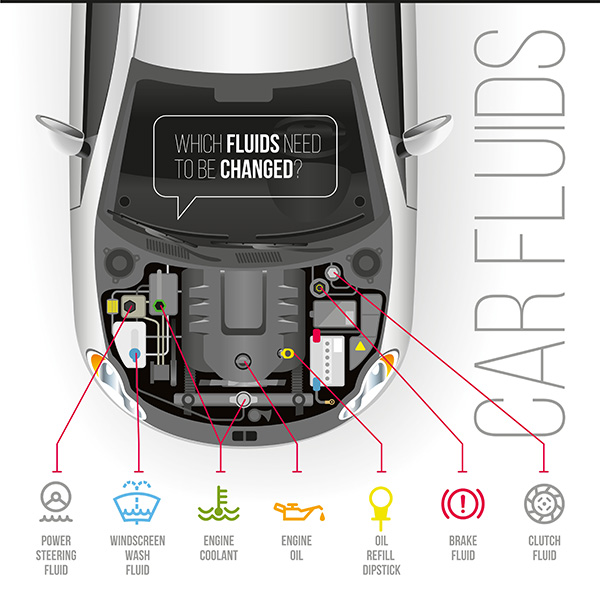
Your car's fluids do very different jobs, even when they all look like something that simply needs topping off. One protects moving engine parts. Another transfers brake pressure. Others manage heat, support transmission operation, or help you see through a dirty windshield.
Knowing the differences makes maintenance easier to follow. It also helps you understand why a full reservoir does not always mean a fluid is in good condition. These five fluids are useful starting points for many vehicles, although the equipment and service requirements depend on your car. A fully electric vehicle, for example, has no engine oil to change.
Engine Oil Protects Moving Parts and Needs Scheduled Changes
Engine oil forms a protective film between moving surfaces, helps carry heat, and manages contamination. Heat, fuel, moisture, and ordinary use gradually change its condition. The filter captures some particles, but it cannot restore depleted additives or reverse the oil's chemical aging.
Replace the oil and filter according to the vehicle's specified interval or oil-life system, including any maximum time limit. Use the required viscosity and approvals. Synthetic oil does not automatically permit a longer interval than the manufacturer allows. If you mostly make short trips around Brentwood, review the requirements that apply to that operating pattern.
Check the level between services using the prescribed procedure. A top-off maintains the amount available; it does not replace the scheduled change. Frequent additions, a new leak, or an oil-pressure warning needs separate attention. An oil-pressure warning with the engine running calls for stopping safely and shutting the engine off.
Engine Coolant Manages Heat and Protects the Cooling System
Coolant transfers heat and helps protect against freezing, boiling, and corrosion. The correct product and concentration depend on the vehicle. Color alone doesn't establish compatibility, and repeatedly adding water can change the mixture's protection.
Replacement follows the manufacturer's coolant requirements and service history. A freeze-protection test answers a useful question about concentration, but it does not prove every corrosion-control additive is still effective. Old or contaminated coolant may need service even when its mixture appears suitable for the expected weather.
Some hybrids and other vehicles have separate cooling circuits with their own requirements. Identify the reservoir before adding anything. Check levels only as directed, and never remove a hot pressurized cap. If coolant repeatedly disappears, have the cause checked rather than making top-offs a permanent routine. An overheating warning needs prompt, safe action.
Brake Fluid Transfers Pressure and Can Age Without Obvious Symptoms
Brake fluid carries pressure through the hydraulic system to operate the brakes. Most road vehicles use a glycol-based fluid that absorbs moisture over time. Moisture can reduce its boiling point, while aging and contamination can affect protection inside the system.
Follow the vehicle's brake fluid replacement schedule and use the specified type. There is no single interval that applies to every car. Fluid checks can help assess condition, but a quick look at its color does not establish its full performance. The brake pedal may feel normal during everyday driving even when the fluid is less suitable for high heat.
Brake fluid replacement is also different from topping up the reservoir. A falling level can relate to pad wear or a leak, so the system needs the appropriate checks. A sinking pedal, major braking loss, or significant brake warning requires stopping safely and arranging assistance.
Transmission Fluid Requirements Depend on the Transmission
Transmission fluid can provide lubrication, cooling, and hydraulic control, depending on the design. Automatic, dual-clutch, continuously variable, and manual transmissions do not all use the same product or service procedure. Hybrid transaxles also vary.
Check the schedule and specification for the exact vehicle. Some services involve draining and refilling, some include a filter, and some have additional requirements. A generic flush recommendation should not replace the manufacturer's instructions. Certain transmissions also require a particular fluid temperature and procedure when the level is checked.
If shifting has become harsh, delayed, or otherwise unusual, arrange an inspection. Fresh fluid is not a guaranteed repair for a worn component or control problem. Explain the symptom and prior service history so the recommendation can address both the transmission's condition and any maintenance that is actually due.
Windshield Washer Fluid Supports Visibility in Every Season
Washer fluid seems simple until the windshield gets covered in road film and the spray stops working. The product needs to clean effectively and provide freeze protection suitable for the temperatures you may encounter. Trips into colder areas can change what you need even if local weather is mild.
This fluid is usually replenished as it is used rather than replaced at a fixed mileage interval. Seasonal changes can still require correcting the mixture, especially when summer fluid or plain water remains in the reservoir. Adding a little winter-rated fluid to an unsuitable mixture does not automatically give the entire system that rating.
A weak spray, reservoir leak, or frozen system needs more than another bottle of fluid. Keep the windshield clear before driving, and have recurring washer problems checked. Use a product intended for windshield washers rather than substituting engine coolant or other vehicle fluids.
Build a Vehicle Fluid Schedule You Can Actually Follow
These five details help organize the next maintenance appointment.
- The exact fluid specifications for your vehicle and powertrain.
- The date and mileage of each previous fluid service.
- The required time limits as well as mileage intervals.
- Any leaks, repeated top-offs, warnings, or changes in operation.
- The driving conditions that affect the manufacturer's service recommendations.
Keep the invoices instead of relying only on a dashboard reminder. One reminder may cover a particular service while other fluids follow separate schedules. If records are missing, we can discuss appropriate checks and establish a clearer maintenance starting point.
Schedule Vehicle Fluid Service in Brentwood, CA
Monkey Wrenches in Brentwood, CA, can help you review fluid maintenance and any related concerns. Bring your records and tell us about leaks, top-offs, or changes you have noticed while driving.
Contact us to schedule the fluid checks and services your vehicle needs.